


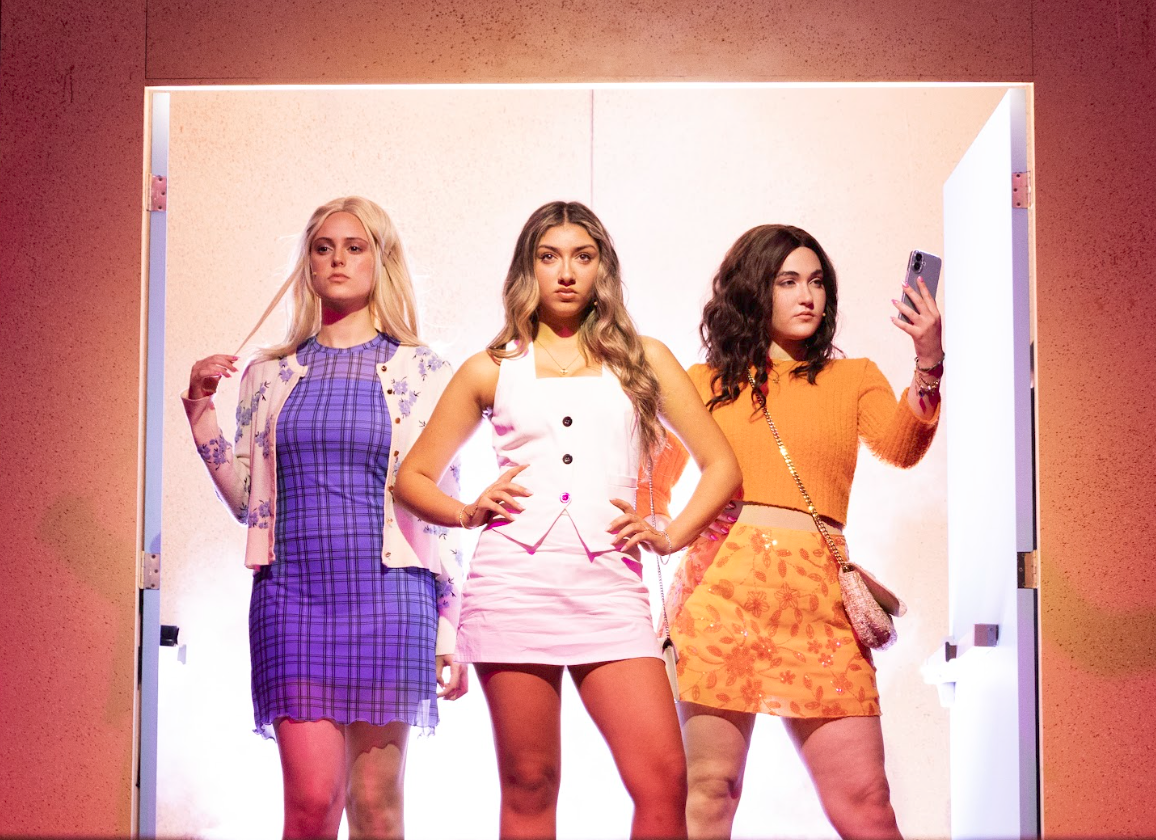
When most people hear about the movie Mean Girls, they immediately think of drama, gossip, fake friends, and the experience of trying to figure out where you belong. And while Mean Girls the Musical portrays all of these themes, the play goes beyond the surface-level experience of high school and looks at them through a more modern lens.
At the beginning of the rehearsal process here at Milken this semester, everyone in the production sat down for a table read (a read-through of the script). Up until then, I hadn’t considered much of the reasoning behind turning Mean Girls into a musical. As we read through the script, I could easily spot many differences from the movie, but there was one major detail that stood out to me: Janis and Damian’s narration.
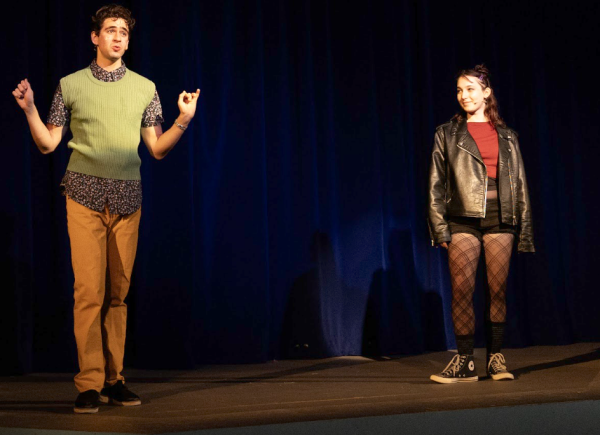
If you have never seen the 2004 movie, Janis and Damian are two art students who help Cady (the new girl) find her footing at North Shore High School. In the musical, they also serve as narrators, breaking the fourth wall to address the audience and using the show to tell a cautionary tale.
While this detail may seem subtle, it completely shifts the intention of the musical. In the movie, Janis and Damien are passive characters and act as plot points that contribute to Cady’s character development. But in the musical, having Janis and Damian continuously address the audience makes the show feel more like a morality tale about being true to yourself and not letting the influence of others affect your choices.
That said, delivering inspiring messages is not the only purpose that Janis and Damian’s narration serves; they are also used to incorporate the unavoidable presence of social media that was not addressed in the original narrative. Throughout the musical, show, Janis and Damian pause scenes frequently to demonstrate how social media can escalate certain situations and be a harmful influence on the lives of teenagers.
Including the component of social media in the musical creates a sense of familiarity, reflecting the modern struggle th
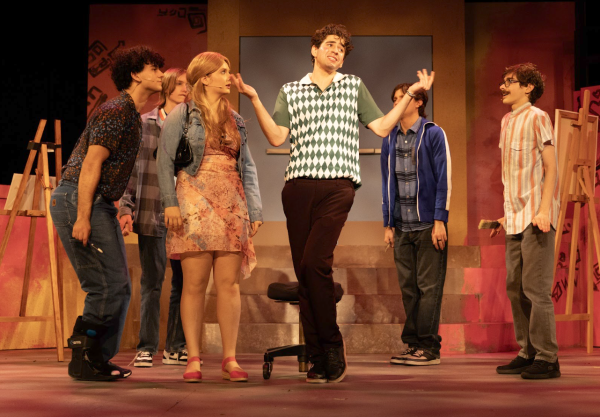
at many teenagers experience in making decisions while living in this digital age.
Damian even sings an entire song called “Stop,” which goes beyond just recognizing social media’s relevance and dives into the danger that social media poses. In this song, one of the main characters of the show, Karen, has a line about being pressured into sending nude photos to a guy, only to see them wind up on the internet.
By writing even a few lines like this into the script, the musical shows the importance of calling out problematic tendencies in our society and how social media amplifies and adds additional pressure on teenagers.
Ultimately, by incorporating these modern issues, Mean Girls the Musical reframes the original story through a more modern lens to call attention to how the struggles and challenges that teenagers face evolve and intensify over time, therefore addressing problematic social norms in our society today.