

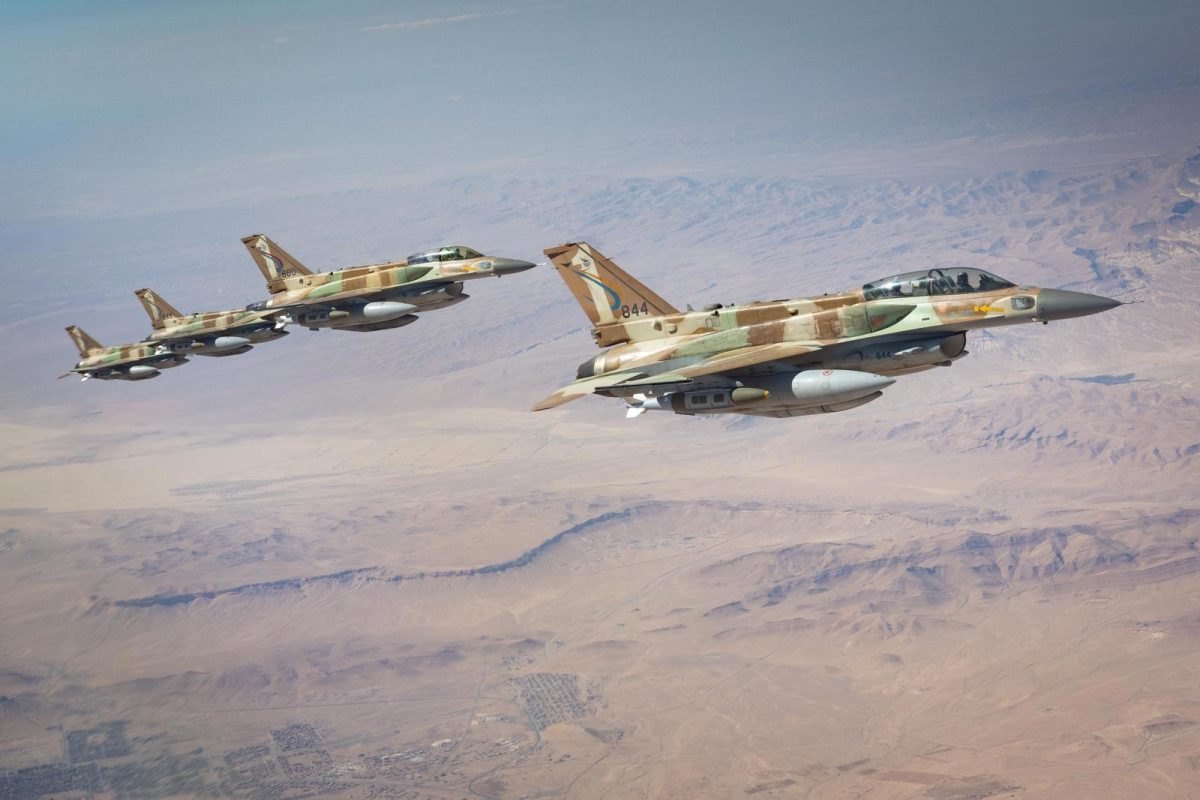
On Saturday morning, February 28th in Iran, a regime long marked by repression, discrimination, and brutality was confronted with unprecedented military force.
In a joint American and Israeli attack dubbed operations Epic Fury and Roaring Lion, a targeted airstrike assassinated the Supreme Leader of Iran, Ayatollah Ali Khamenei. Khamenei played a central role in bringing the regime to power during the 1979 revolution and has ruled for 37 years as Supreme Leader. Recently, he was instrumental in suppressing protests and killing what some estimate to be nearly 30,000 of his own citizens.
During the same operation that assassinated Khamenei, tens of other Iranian military and government officials were killed, including the Chief of Staff of Iran’s armed forces and a former Iranian President. The IDF and US military also targeted nuclear sites, military compounds, and other strategic infrastructure in Iran.
In retaliation, Iran began sending ballistic missiles to strike not only Israeli civilians but cities and US military bases in countries all over the Arab gulf. These include the UAE, Oman, Kuwait, Jordan, Saudi Arabia, Bahrain, Qatar, and Iraq.
In Kuwait, 3 US service members tragically fell during one of these attacks.
Iran’s decision to expand military action across the Gulf demonstrates that the conflict is no longer contained between two states. By striking cities and US bases across multiple countries, Tehran has risked dragging itself into a brutal multi-front war. Even more consequential for the regime, its aggression risks accelerating regional realignment, potentially uniting Israel and additional Arab nations that have not yet formalized ties under the Abraham Accords.
On Sunday, March 1st, as missiles rained down all over Israel, the city of Beit Shemesh was directly hit and nine civilians were killed in a synagogue. The nation continues to be in a state of flux with most citizens constantly running in and out of bomb shelters or bunkers. Sadly, many have faced this reality many times in the last two years.
Globally, the implications of these escalations are profound. The targeted killing of Ayatollah Khamenei marks one of the most consequential geopolitical moments in the Middle East in decades. Whether this operation weakens the regime’s grip on power waits to be seen.
That said, effective regime change is virtually impossible to achieve in almost any country. Although Israeli Prime Minister Benjamin Netanyahu and President Donald Trump have urged the Iranian people to seize the moment and tear down the regime following the Ayatollah’s death, that task remains far easier said than done.
While world leaders calculate their next move, the consequences of this escalation are already being felt closer to home. At Milken, it is currently unclear whether Tiferet will be able to leave on time. Some students are speculating that airspace may soon be reopened around Israel. However, many parents and 10th graders will surely be hesitant to enter a nation that is currently experiencing an active conflict. For now, the only course forward is vigilance, to watch developments carefully and allow Milken faculty to ensure that every decision made prioritizes safety above all else.
Nevertheless, the events of February 28th will surely be etched in Middle Eastern or even world history. Whether these days will be remembered as the start of the fall of Iran’s regime or the beginning of a more dangerous war hangs in the balance of every second and hour. The decisions made by world leaders in these consequential moments will not only determine the region’s immediate future, but the chapters of history our children will one day read.