


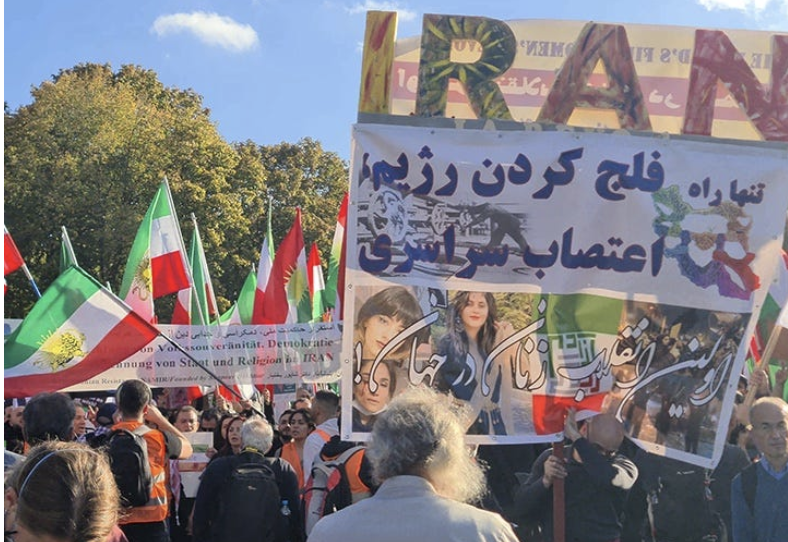
Over the past several months, anti-government protests have erupted across major cities in Iran. Although Iranian citizens initially focused on their nation’s dire economic conditions, many have since shifted toward broader resistance against the regime itself.
The country’s government, led by its line of Ayatollahs, has enforced a strict interpretation of Sharia Law since the Islamic Revolution in 1978. This has resulted in widespread discrimination and systemic oppression of the Iranian people, particularly women.
Iranian responses to the protests have been nothing short of brutal. The Revolutionary Guard has taken action to either heavily injure or kill those protesting on the streets. Some witnesses and experts estimate that 30,000 Iranian protestors and dissenters have been murdered.
At the White House, prior to Iran’s deadly attacks on protestors, President Donald Trump repeatedly threatened military intervention should the regime move to violently suppress demonstrations. Although the United States deployed multiple aircraft carriers to the region after Iran began using lethal force against protestors, it has taken no clear or concrete action either in support of the demonstrators or in direct opposition to the regime.
As is often the case, Israel finds itself in a delicate and complex dilemma that demands careful judgment and measured action. On one hand, American strikes on Iran could help destabilize a government that has long supported, funded, and armed terrorist proxies such as Hamas and Hezbollah. On the other, U.S. military action against Iran would almost certainly provoke a violent retaliation against Israel – and this could spark a longer term clash.
As the war in Gaza and Lebanon has slowed down in the past several months, it is unclear whether Israel could continue to fully support another long-term conflict. It’s also worth remembering, however, that the nicknamed “12 Day War” with Iran during June 2025 left the Ayatollah significantly weakened and exposed serious limitations in Iran’s military capabilities.
These considerations are important for Iran to weigh before launching any attack on Israel. That said, the regime’s ideological hostility toward the West and its commitment to Jihadist principles may override appeals to logic or long-term national survival.
As these events continue to unfold and Tifferet prepares to leave in less than a month, Milken students are left anxiously watching to see whether another conflict will erupt.
The class of 26’ had both their Tifferet and Robin Family Tiyul cancelled due to the conflict post-October 7th. This had a profound impact on the grade and took away a trip iconic to the entirety of Milken’s high school experience.
Current sophomores can only hope that their trip will occur smoothly and that military action will not be taken before or during the duration of Tifferet. For now, our community can only constantly monitor the situation and let Milken’s administration take action to prioritize student safety above all else.