

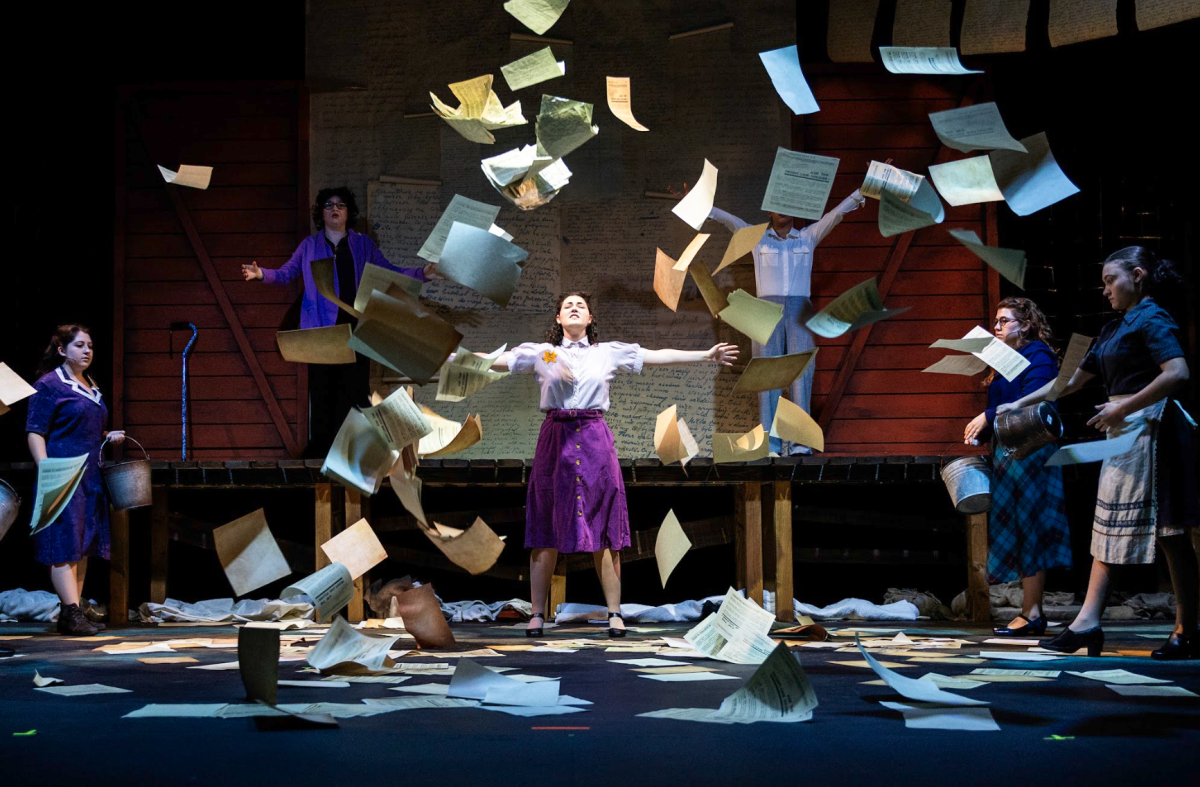
All of us at Milken are taught the history of the Holocaust, especially those of us whose relatives experienced it. Most of us are even introduced to it in elementary school, so what makes putting on a play about the Holocaust any different than learning about it in a classroom? “Letters to Sala” is not only informative about the Holocaust, but it forces us to confront our history in a much more personal way beyond the walls of a classroom.
“Letters to Sala” is a play based on the experience of Sala Kirschner, a teenage girl in 1930’s Poland, and her life after volunteering to take her older sister Raizel’s place in a Jewish labor camp. The show illustrates her experience navigating a series of labor camps and her life-risking preservation of the hundreds of letters she received from friends and family.
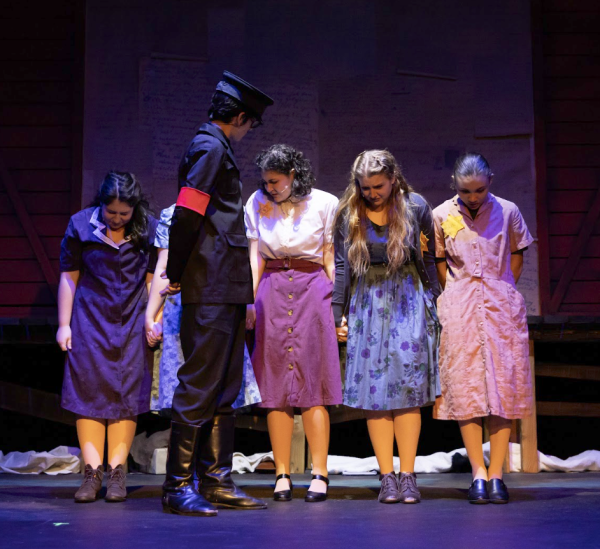
Since the show has come out, over 200 schools have done the production. Of all of those schools, Milken is only the second Jewish school to perform it. This gives Milken a special responsibility in putting on this show, as Ann Kirschner (Sala’s daughter) said when talking to Milken students: “I can’t help but think that your class, brings a certain weight to the story that is to be respected.”
Like Sala, we all have a duty to preserve the memory and lives of those lost in the Holocaust; that’s the intention for a show that carries this much weight. Playwright of the show Arlene Hutton commented when talking to Milken students, “You are the ones now keeping the story alive, keeping these people alive by saving the letters, as Sala says in the play.”
That statement from Arlene is the exact reason I wanted to be a part of this show. It forced me to face my own history in a way that I’ve never had to before. I had to memorialize real people and spread this incredible story of hope and resilience. Although I’ve performed in many shows at Milken, this is the first time that I’ve done something so personal. It’s the first time I’ve ever had to reenact a real event. It’s reliving the fear and struggles and fight for survival that were my own relatives’ reality 65 years ago; it’s a surreal feeling.
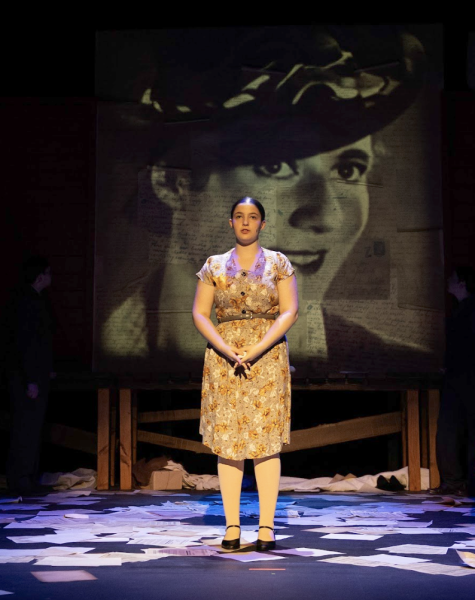
Cast member, Fiona Terk ‘29 described, “This is real, this was real, this could be real again.”
Throughout the production, the other cast members and I had the support of one another and our incredible director, Ms. Sarah Figoten. Together, we did our best to carry out our mission as she described in her director’s notes: “In experiencing this story together, we all become part of preserving those voices, carrying their memories forward and keeping their stories alive.”